

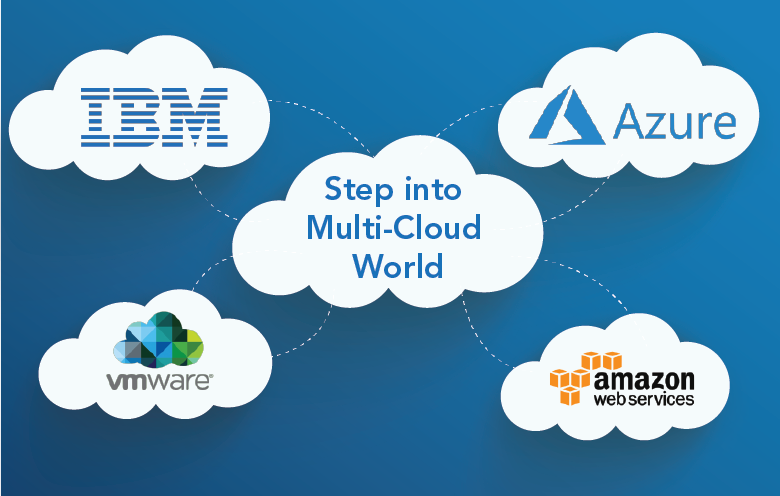
Organizations across industries are increasingly moving beyond dependence on a single cloud provider. Instead, they are adopting a multi-cloud strategy, where services from multiple cloud platforms are combined to improve flexibility, resilience, performance, and cost control. As digital transformation accelerates worldwide, multi-cloud environments are becoming a practical requirement rather than an optional enhancement.
This article explains what a multi-cloud strategy is, why businesses are embracing it, how it works in practice, and what organizations should consider before adopting it.
What Is a Multi-Cloud Strategy
A multi-cloud strategy refers to the use of cloud services from two or more public cloud providers within the same organization. These providers may include combinations such as infrastructure services from one vendor, analytics tools from another, and storage solutions from a third.
Unlike hybrid cloud environments, which combine on-premises infrastructure with cloud services, multi-cloud environments involve multiple cloud platforms working together to support business operations.
Companies adopt this approach to avoid dependence on a single vendor while improving performance, availability, and innovation opportunities.
Key Reasons Companies Are Adopting Multi-Cloud Strategies
Organizations are moving toward multi-cloud architectures for several strategic advantages.
Avoiding Vendor Lock-In
Vendor lock-in can limit flexibility and increase long-term costs. Multi-cloud strategies help organizations:
- Maintain control over their infrastructure decisions
- Switch providers when needed
- Negotiate better service agreements
- Reduce dependency on proprietary technologies
This flexibility strengthens long-term IT planning and risk management.
Improving Reliability and Availability
Using multiple cloud providers ensures that business operations continue even if one provider experiences downtime.
Benefits include:
- Reduced service interruptions
- Improved disaster recovery readiness
- Geographic redundancy
- Higher application uptime
Businesses with mission-critical workloads often prioritize this resilience.
Optimizing Performance Across Regions
Different cloud providers offer stronger infrastructure coverage in specific regions. Multi-cloud strategies allow organizations to:
- Deploy workloads closer to users
- Reduce latency
- Improve application responsiveness
- Deliver consistent user experiences globally
This is particularly valuable for companies serving international customers.
Enhancing Security and Risk Management
Security risks can increase when infrastructure depends on a single provider. Multi-cloud environments reduce exposure by distributing workloads.
Organizations gain:
- Better data protection strategies
- Improved compliance flexibility
- Reduced single-point failure risks
- Stronger disaster recovery planning
This layered approach supports stronger cybersecurity posture.
Supporting Innovation and Technology Choice
Each cloud provider offers unique tools and services. A multi-cloud strategy enables teams to select the most suitable technologies for each workload.
Examples include:
- Choosing one provider for AI services
- Using another for storage optimization
- Selecting a different platform for analytics processing
This flexibility accelerates experimentation and product development.
Managing Costs More Effectively
Cost optimization remains one of the strongest motivations behind multi-cloud adoption.
Organizations can:
- Compare pricing between providers
- Shift workloads to lower-cost environments
- Avoid long-term licensing dependencies
- Use specialized services only when required
Strategic workload placement improves financial efficiency over time.
Common Multi-Cloud Architecture Models
Companies implement multi-cloud strategies in different ways depending on operational goals.
Redundant Deployment Model
Applications are deployed across multiple providers to ensure continuity if one environment fails.
This model supports high availability systems such as financial services platforms and healthcare applications.
Best-of-Breed Model
Organizations select different providers for specialized services.
Examples include:
- One provider for computing
- Another for storage
- A third for machine learning services
This approach maximizes performance and functionality.
Data Segmentation Model
Sensitive workloads are separated across providers for compliance or security purposes.
Industries such as banking and healthcare often adopt this approach.
Challenges of Implementing a Multi-Cloud Strategy
Despite its advantages, multi-cloud adoption introduces operational complexity that organizations must manage carefully.
Increased Management Complexity
Multiple cloud platforms require:
- Advanced monitoring tools
- Unified management systems
- Skilled IT professionals
- Standardized governance policies
Without proper planning, complexity can reduce efficiency.
Security Coordination Requirements
Security policies must remain consistent across platforms.
Organizations need:
- Identity management integration
- Access control alignment
- Cross-platform encryption strategies
- Continuous monitoring systems
Centralized visibility becomes essential.
Data Integration Difficulties
Moving data between platforms can introduce:
- Latency issues
- Synchronization delays
- Storage compatibility concerns
- Compliance risks
Careful architectural planning helps reduce these challenges.
Best Practices for Building a Strong Multi-Cloud Strategy
Successful multi-cloud adoption depends on structured planning and governance.
Organizations should consider the following practices:
- Define clear workload placement strategies
- Use centralized monitoring platforms
- Standardize security policies across providers
- Automate infrastructure management wherever possible
- Train teams on multiple cloud ecosystems
- Implement cost monitoring dashboards
Strategic planning ensures the benefits outweigh operational complexity.
Industries Leading Multi-Cloud Adoption
Several sectors are rapidly embracing multi-cloud architectures due to regulatory requirements and performance expectations.
These industries include:
- Financial services
- Healthcare
- Retail and e-commerce
- Telecommunications
- Manufacturing
- Media and entertainment
Each sector benefits from improved resilience, compliance flexibility, and global service delivery.
The Future of Multi-Cloud Environments
Multi-cloud strategies are expected to evolve alongside containerization, edge computing, and artificial intelligence platforms. Organizations are increasingly adopting cloud-neutral development approaches that allow applications to run seamlessly across providers.
Future trends include:
- Greater automation across platforms
- Unified cloud management interfaces
- Increased use of container orchestration tools
- Improved interoperability standards
These developments will simplify adoption while expanding business capabilities.
Frequently Asked Questions
1. How is a multi-cloud strategy different from a hybrid cloud strategy
A hybrid cloud combines on-premises infrastructure with cloud platforms, while a multi-cloud strategy uses multiple public cloud providers simultaneously.
2. Can small businesses benefit from multi-cloud adoption
Yes. Small businesses can use multiple providers for backup, storage, or application hosting to improve flexibility and reduce dependency risks.
3. Does multi-cloud increase operational costs initially
Implementation costs may increase at the beginning due to integration and training requirements, but long-term savings often result from workload optimization.
4. What skills are required to manage a multi-cloud environment
Teams typically need expertise in cloud architecture, security configuration, automation tools, and monitoring platforms across multiple providers.
5. Is multi-cloud suitable for legacy applications
Legacy applications can be migrated gradually using containerization or modernization strategies, making them compatible with multi-cloud environments.
6. How does multi-cloud support regulatory compliance
Organizations can store data in provider regions that meet local regulations and distribute workloads according to compliance requirements.
7. What role does automation play in multi-cloud management
Automation helps streamline deployment, monitoring, scaling, and security enforcement across multiple platforms, reducing operational complexity and improving reliability.