

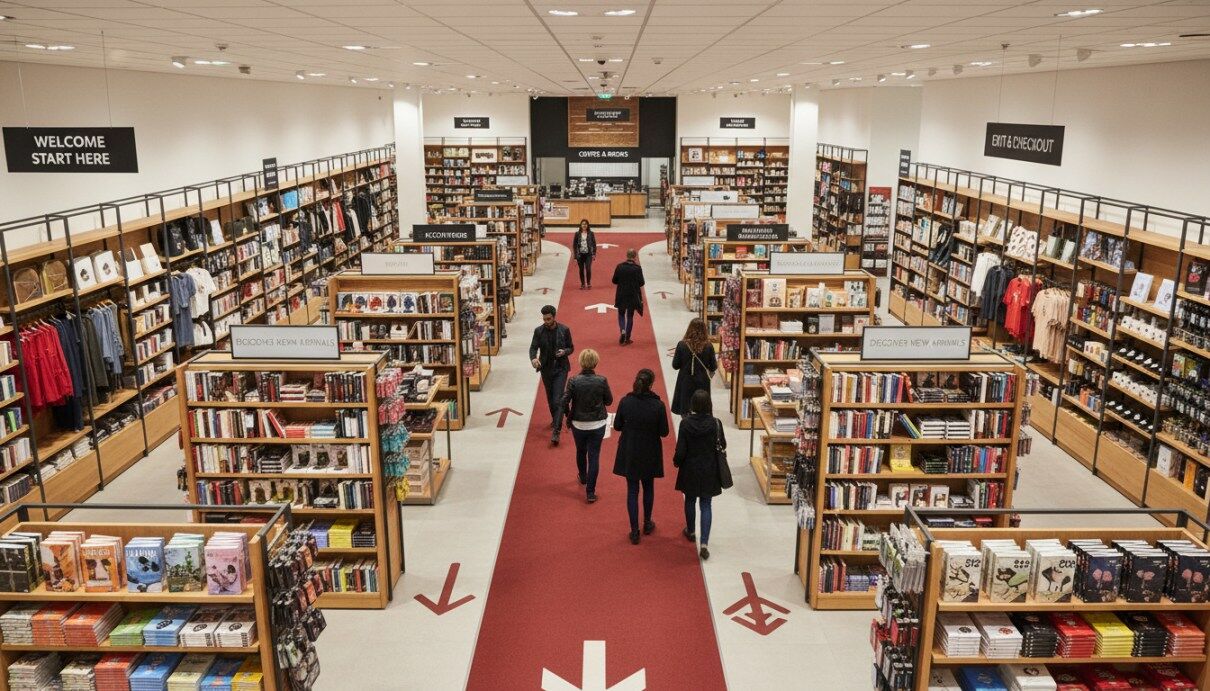
Store layout plays a powerful role in shaping how customers move, explore, and make purchasing decisions inside a retail space. A well planned layout does more than organize products. It quietly guides attention, increases product visibility, and encourages longer browsing time that often leads to higher sales.
Retailers who understand layout psychology can improve customer experience while increasing conversion rates without aggressive marketing.
Why Store Layout Matters in Retail Success
Customers rarely enter a store with complete certainty about what they will buy. Layout design influences how they discover products and how long they remain inside the store.
Benefits of an effective store layout include:
- Improved product visibility
- Better customer flow inside the store
- Increased impulse purchases
- Higher time spent browsing
- Stronger overall shopping experience
These factors directly affect purchasing behavior.
Understanding Customer Movement Patterns Inside Stores
Most customers follow predictable movement habits when entering retail spaces. They often turn slightly toward one direction after entry and begin scanning nearby displays.
Retailers use this behavior to:
- Place attractive displays near entrances
- Highlight seasonal products early
- Guide movement through structured pathways
- Encourage exploration across departments
Movement planning increases exposure to more products.
Entry Zone Design and First Impressions
The entrance area creates the first interaction between customers and the store environment. A welcoming entry encourages people to continue exploring rather than leaving quickly.
Effective entry zone strategies include:
- Keeping space open and comfortable
- Avoiding overcrowded product placement
- Highlighting featured items clearly
- Using clean signage for orientation
A strong first impression increases engagement.
Importance of Product Placement at Eye Level
Customers naturally notice items placed at comfortable viewing height before others. Eye level placement often increases product selection rates.
Retailers commonly position:
- Popular products
- higher margin items
- seasonal collections
- promotional goods
at this level to improve visibility and sales performance.
Creating Clear Pathways That Encourage Exploration
Customers feel more relaxed when navigation inside a store is simple and intuitive. Confusing layouts often reduce browsing time.
Effective pathway design includes:
- Wide walking spaces between shelves
- Logical product grouping
- Smooth transitions between departments
- Visible direction cues across the store
Comfortable movement encourages longer visits.
Using Strategic Shelf Arrangement to Increase Purchases
Shelf organization influences how customers compare products and make decisions.
Smart arrangement techniques include:
- placing complementary items near each other
- organizing products by usage category
- positioning frequently purchased items deeper inside the store
- keeping premium items clearly visible
These techniques increase exposure to multiple product options.
Role of Lighting in Influencing Buying Decisions
Lighting affects how customers perceive product quality and store atmosphere. Well planned lighting improves both comfort and visibility.
Effective lighting strategies include:
- highlighting featured products clearly
- using warm lighting in lifestyle sections
- maintaining brightness in functional product areas
- avoiding shadows that hide product details
Lighting supports confident purchasing decisions.
Importance of Checkout Area Product Placement
Customers often make last minute purchases near checkout counters. This area provides a strong opportunity for impulse buying.
Common checkout zone strategies include:
- displaying small useful items
- placing seasonal accessories
- offering quick decision products
- keeping items within easy reach
These additions can increase total purchase value.
Using Store Layout to Support Brand Identity
Store layout communicates brand personality without words. A structured environment builds trust and consistency.
Examples include:
- minimalist layouts supporting premium branding
- open layouts encouraging relaxed browsing
- organized product zones improving clarity
- consistent display themes reinforcing recognition
Layout strengthens brand perception naturally.
Adjusting Layout Based on Customer Behavior Data
Retail environments improve when layouts adapt to real customer interaction patterns.
Retailers often analyze:
- frequently visited store areas
- slow moving product zones
- time spent in departments
- seasonal movement changes
Adjustments based on behavior improve performance continuously.
Encouraging Impulse Purchases Through Layout Planning
Impulse purchases often happen when customers encounter unexpected but relevant products during browsing.
Effective layout triggers include:
- cross category product placement
- promotional end shelf displays
- seasonal arrangement changes
- rotating feature zones regularly
These changes keep the shopping experience engaging.
Frequently Asked Questions
What is the most effective store layout type for increasing sales
Grid layouts work well for supermarkets and convenience stores, while free flow layouts support lifestyle retail environments where browsing is encouraged.
How often should store layouts be updated
Minor adjustments can be made seasonally, while larger layout changes are often planned annually based on performance data.
Do smaller stores benefit from layout planning as much as larger stores
Yes. Even compact stores can increase product visibility and improve customer movement with thoughtful layout organization.
How does store layout influence customer satisfaction
Clear navigation, comfortable spacing, and visible product placement reduce frustration and make shopping more enjoyable.
Can store layout reduce customer decision fatigue
Yes. Logical product grouping helps customers compare options easily and choose faster.
Why are promotional displays often placed near aisle ends
Aisle end displays attract attention because they are visible from multiple directions during customer movement.
How does seasonal layout adjustment improve store performance
Seasonal adjustments highlight relevant products at the right time, increasing customer interest and improving sales opportunities.